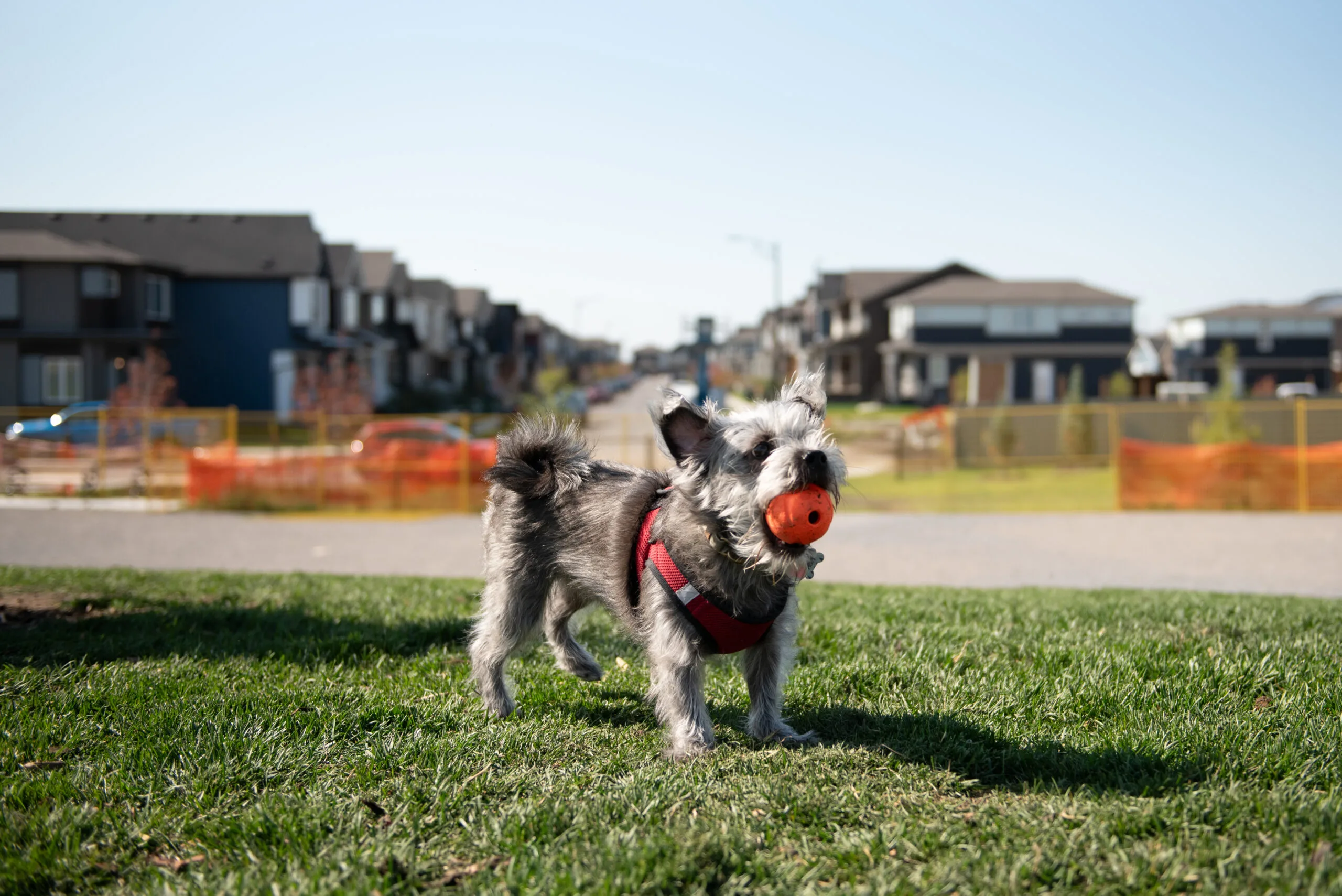
In a city where pets are a part of the family, planning for dogs is no longer an industry option — it’s a necessity.
When people are choosing a place to live, they aren’t just looking at nearby schools or playgrounds; they’re also looking for spaces that welcome their cats and dogs. Whether someone wants to live as a city dweller or in a growing suburban neighbourhood, the Edmonton region offers a great quality of life and diverse housing, and a big part of this lies in accommodating their pets.
Home is Where the Dog Is
Good downtown design relies on planners, architects, and developers creating livable spaces, repurposing underused land, and accommodating a range of residents.
As Edmonton’s dog population has grown, so has the need for a more intentional approach to shared outdoor space. In 2016, the City of Edmonton introduced the Dogs in Open Spaces Strategy, a framework designed to balance the needs of dog owners, non-pet owners, and the broader park system.
Rather than treating off-leash areas as isolated amenities, the strategy focuses on thoughtful placement, consistent design, and long-term maintenance. Since its implementation, off-leash spaces across the city have been enhanced through coordinated planning efforts, reflecting a shift in how Edmonton thinks about dogs in public space: not as an added pressure on the park system, but as a permanent and planned part of urban life.
Now, new guidelines from the City’s Landscape Design Construction Standards outline how off-leash areas can be established across the region, reinforcing the idea that planning for dogs is no longer an afterthought — it’s a core component of city building.
As of January 2026, the Edmonton region has 14 official dog parks, 50 designated off-leash areas, and 22 temporary dog parks — many of which are operated by community leagues, and are in Edmonton’s central and suburban south areas.
But with just four official dog parks downtown, the City saw an opportunity to create something bigger and better for residents and workers and their pets.
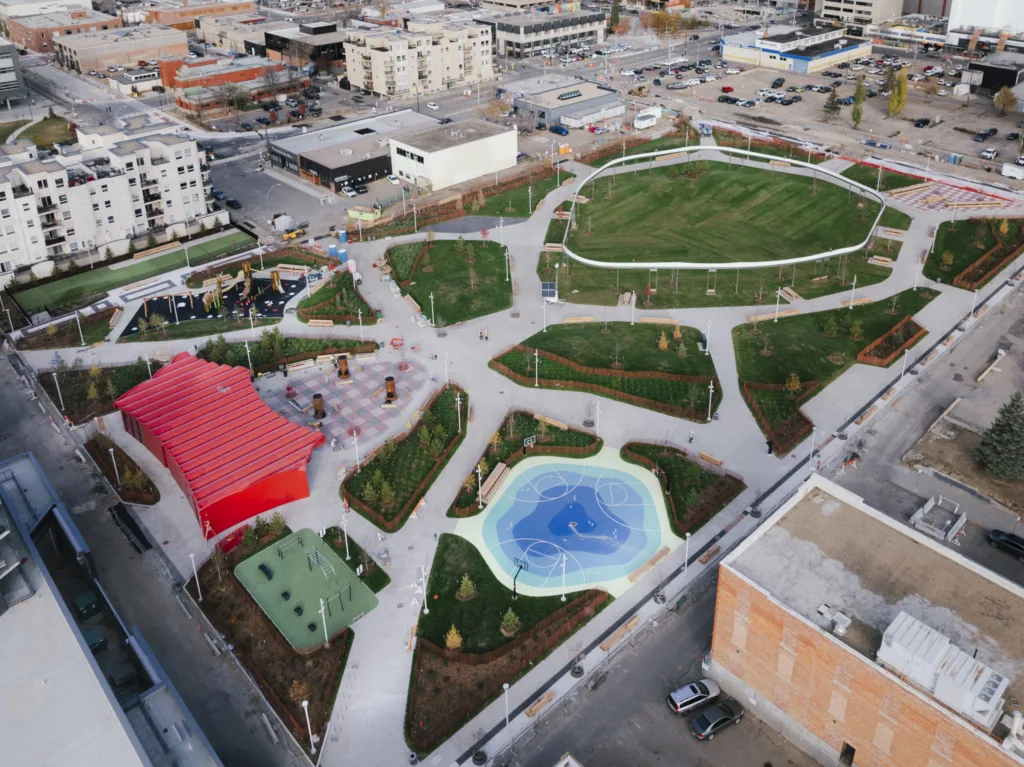
O-day’min Park, located near Ice District, was designed as a flagship downtown green space with a central, purpose-built off-leash area.
“We treated the dog off-leash areas as a primary program element rather than a secondary one,” said Matt Sloan, Senior Landscape Architect for Open Spaces Planning and Design with the City of Edmonton. “We also worked to integrate these amenities into the heart of the park, ensuring they felt like a seamless part of the open space.”
The design prioritizes durability and comfort — incorporating crushed stone and antimicrobial artificial turf to manage odour and withstand heavy use — while carefully considering the atmosphere in and around the park. “We used lighting, not just for safety, but also to extend the usability of the park during Edmonton’s winter months, and included strategic tree positioning to create microclimates to provide shade in the summer and windbreaks for owners and pets in the winter.”
The City’s Dogs in Open Spaces Strategy guides where and how off-leash areas are developed, from compatibility and fencing to signage, accessibility and long-term evaluation. Planning also considers licensed dog-to-human ratios, proximity to other sites and future neighbourhood growth.
The goal? To ensure every neighbourhood is within 1.25 kilometres — or a 15-minute active trip — of an off-leash area.
“The future of our public realm is informed by a suite of strategic documents, like Breathe: Edmonton’s Green Network Strategy and the Downtown Public Places Plan,” said Sloan. “These frameworks, combined with the Dogs in Open Spaces Strategy, provide the criteria for where and how future park space and off-leash areas are developed, and how they meet the specific needs of the growing downtown community while remaining inclusive for all residents.”
Rethinking Community Design
Understanding who future residents will be — and how they want to live — is a big piece of the housing development puzzle.
“City building is about accommodating each and every household,” said Crystal Brightwell, Vice President of Communities at Cameron Development Group. “We need to assume that 50 per cent of households include pets, and sidewalks, trails, and park adjacency have to be planned accordingly.”
Planning and design are often described as human-centred, placing people at the core of many communities being built. But, in a city with more than 20,000 dogs and cats, the definition of “family” has to change. Pets, particularly dogs, are a central part of the family unit in Edmonton, making animal-friendly planning more important than ever.
And, as communities grow denser, space must work harder to meet the needs of all residents, whether developing new spaces or utilizing existing space to fit every pet’s lifestyle and needs, regardless of size, age, or breed.
The Parks, a Maclab Development Group project that opened its doors in April of 2025 did exactly that. “When we first started planning The Parks, around 2018, pet amenities weren’t even on the priority list. Now, they’re a requirement,” said President and CEO Bill Blais. “Today, if you don’t provide meaningful amenities for pets, you risk losing renters.”
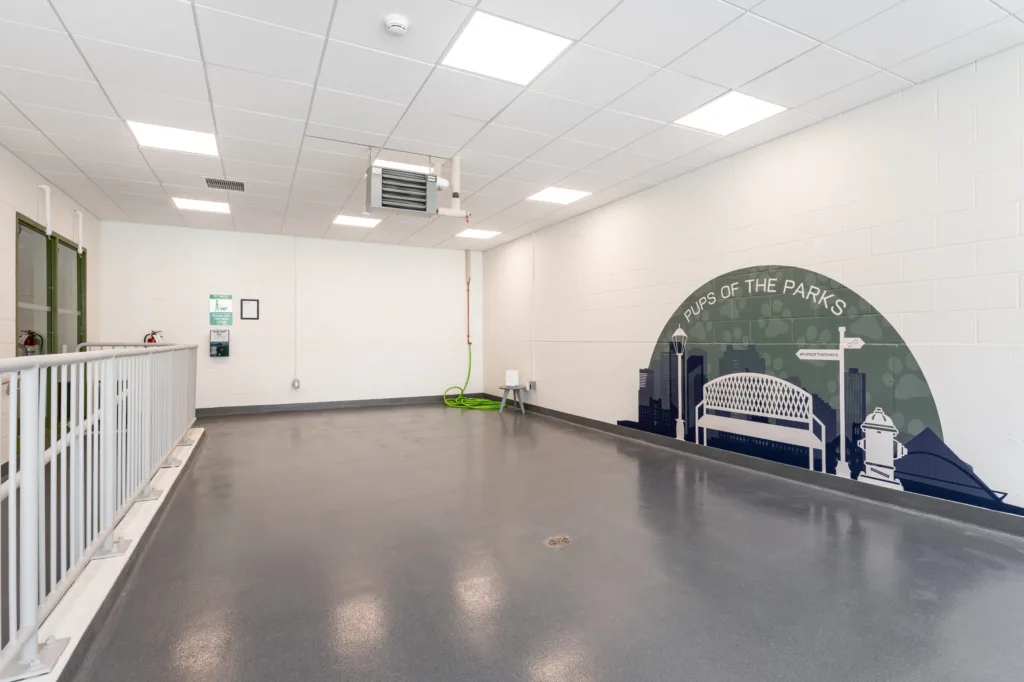
Currently home to over 50 pets, the 36-storey tower is equipped for animals of any age, breed, or size, whether it’s from thoughtfully laid out wash stations or dedicated indoor play areas to just making sure the concierge on shift has dog treats available.
“We also had to think carefully about elements like lighting, acoustics, waste management, and odour control,” he said. “With our dog run at The Parks, the atmosphere was extremely important. We incorporated south-facing windows to bring in natural light to curate a welcoming space and installed acoustic panels to soften barking and reduce sound transmission to other parts of the building.”
The large, rectangular layout allows dogs to chase a ball back and forth, and the use of artificial turf system, built over a sealed concrete base with drainage underneath, allows for easy clean up and regular washing. “We also include seating areas for owners, so it becomes a social space and not just a functional one,” said Blais. “It’s open 24/7 and we see up to 12 dogs playing in there at a time.”
Another key feature is a self-serve dog washing station, situated inside the main floor near the entrance, to ensure residents can clean their dogs before heading back to their units.
“We’ve seen a major lifestyle change,” he added. “More people are living alone for longer and choosing to have pets for companionship. It’s become a much more accepted and common way of living, and because of that, we’ve adapted our developments to reflect this reality.”
Finding Room to Run
Over the years, dog parks have become one of the most powerful tools for attracting residents. The demand is clear: pet-friendly amenities can significantly influence where people choose to live. By reallocating space and focusing on what residents value, communities can create places that are not only livable, but are desirable.
“Dog parks should be within close proximity to homes,” said Brightwell. “We can’t just expect people to take their pets to underused school sites. We have to think creatively about efficient use of space and what residents actually want.”
The key elements required in these spaces — shade, areas to play, ramps and platforms of varying heights, seating for people, water features and a dog-drinking area — all must fit to the park in a harmonious way.
New and developing neighbourhoods have increasingly become home to these parks, including the Manning Village Dog Park, Paisley Dog Park, The Orchards Dog Park, and a series of pop-up parks in Summerside, South Terwillegar, and Glenridding Heights.
Manning Village, a previously vacant infill site that now includes more than 300 homes, illustrates how pet-focused amenities can shape a new neighbourhood. “Within three years of opening, the Manning Village Dog Park’s Facebook presence generated three times more engagement than the community’s main website,” said Brightwell. “This really showed us the passion of dog owners and the role these spaces play in attracting new residents.”
Now, this community is adjacent to a 10-acre Urban Village park complete with walking trails, sledding hills, a playground for all ages, and the first, and only, share-use dog park in collaboration with the City of Edmonton.
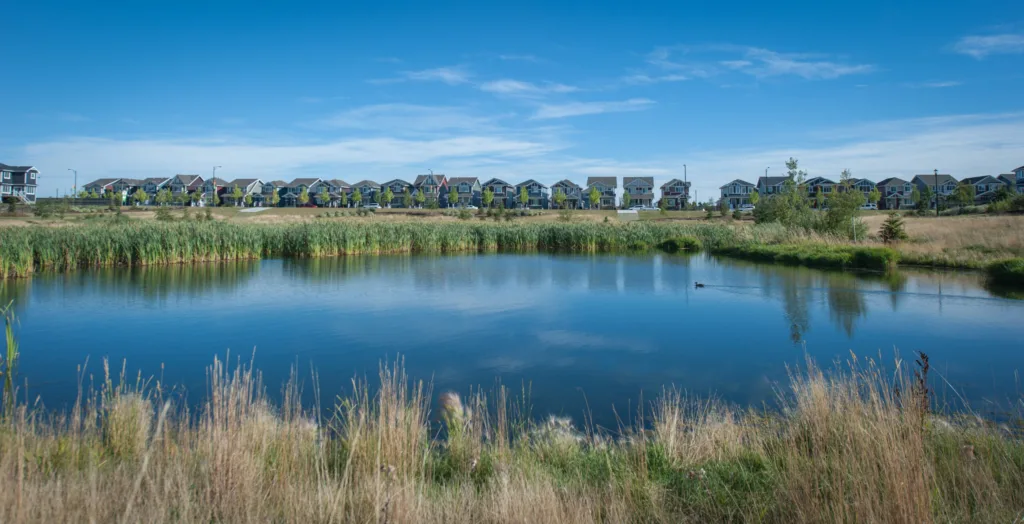
“In Edmonton, we’re seeing a large and growing demographic of residents who have or want pets,” said Mike Kohl, Senior Vice President of Communities at Brookfield Residential. “From a planning perspective, we are designing our communities now with pets in mind as integral family and community members, from pathways, green spaces, and dog parks right into home designs. It’s essential that we meet residents’ needs through both a human and animal centred lens.”
While many communities offer traditional amenities, few intentionally integrate pet-focused infrastructure as a central feature of their community design. The Paisley dog park, a previously unprogrammed area with no real amenities, was able to consider the size, agility equipment, and materials used, incorporating small, crushed shale and a naturalized grass area – a more durable material than sod or gravel.
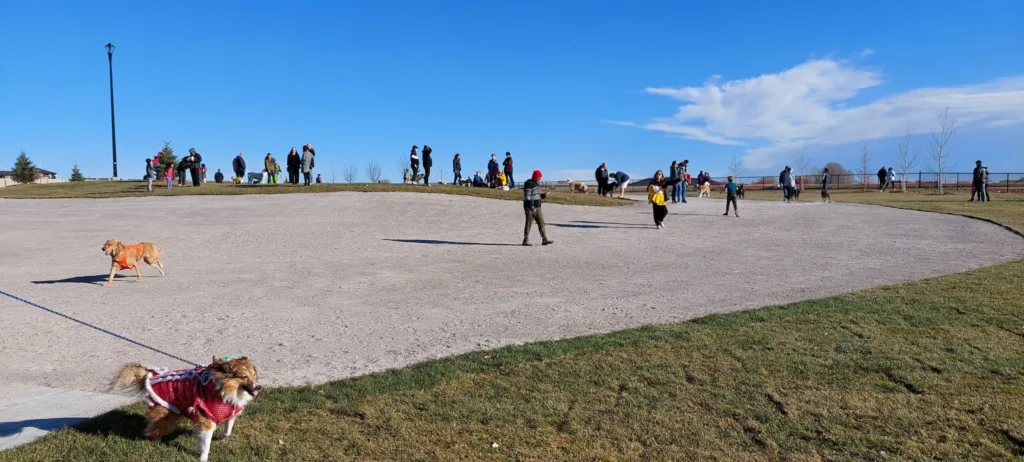
Both dog parks also include a central mound, which owners can gather around to socialize while their pups play freely.
“Creating dog parks in Paisley and The Orchards provided a meaningful point of differentiation within south Edmonton,” said Kohl. “We saw an opportunity to improve livability and accessibility by providing a dedicated space within the community, supporting daily play and exercise, encourages social connection, and enhances overall well-being.”
Part of the Family, Part of the City
In Edmonton, planning for dogs is ultimately about planning for people. These parks are a way for residents to get out of the house, socialize with others, and exercise with their dogs.
As cities grow denser and lifestyles evolve, the question is no longer whether communities should accommodate pets, but how they’ll do it. Dog runs, off-leash spaces, indoor play areas, and pet-friendly buildings are not niche amenities — they are signs of a city that understands how people actually live.
“Our industry plays a vital role in shaping communities for everyone, and that includes dogs,” said Kalen Anderson, CEO of BILD Edmonton Metro. “Our members are constantly finding creative ways to design spaces with intention and new considerations, taking into account multi-season amenities and comfortability for pets.”
By recognizing pets as part of the family and designing our communities around this, we’re creating places where residents can put down roots and build lasting connections. Designing for dogs isn’t just about providing room to run, it’s about atmosphere, convenience, comfortability, and scale — whether a 40-storey building or a suburban berm. A city that works for its four-legged residents is often one that works better for everyone.
Written by Payton Phillips
Read the article in Building Magazine.