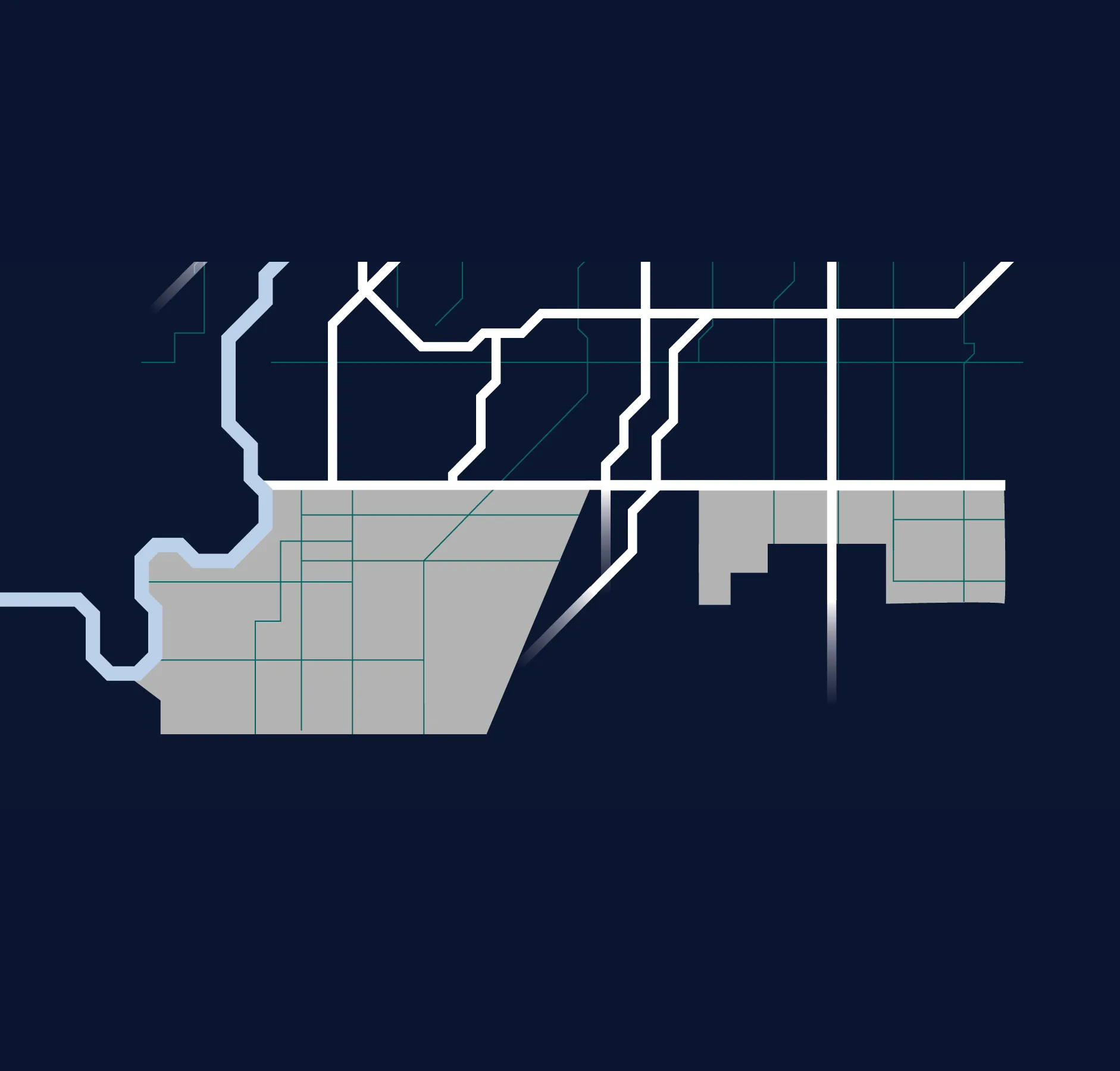
Planning for Edmonton’s Future Growth: South of 41st Avenue SW
Edmonton is growing. To keep housing attainable, support economic growth, and give people more choice in where and how they live, the city needs to plan today for the communities it will need tomorrow. The lands south of 41st Avenue SW are an important part of that future.
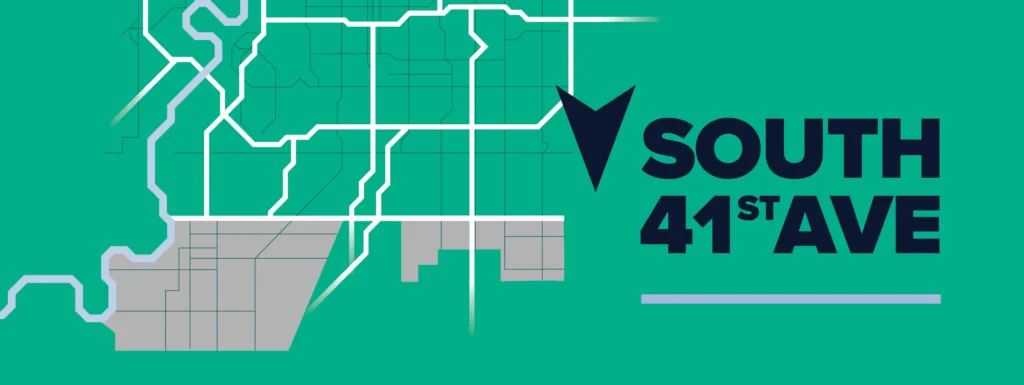
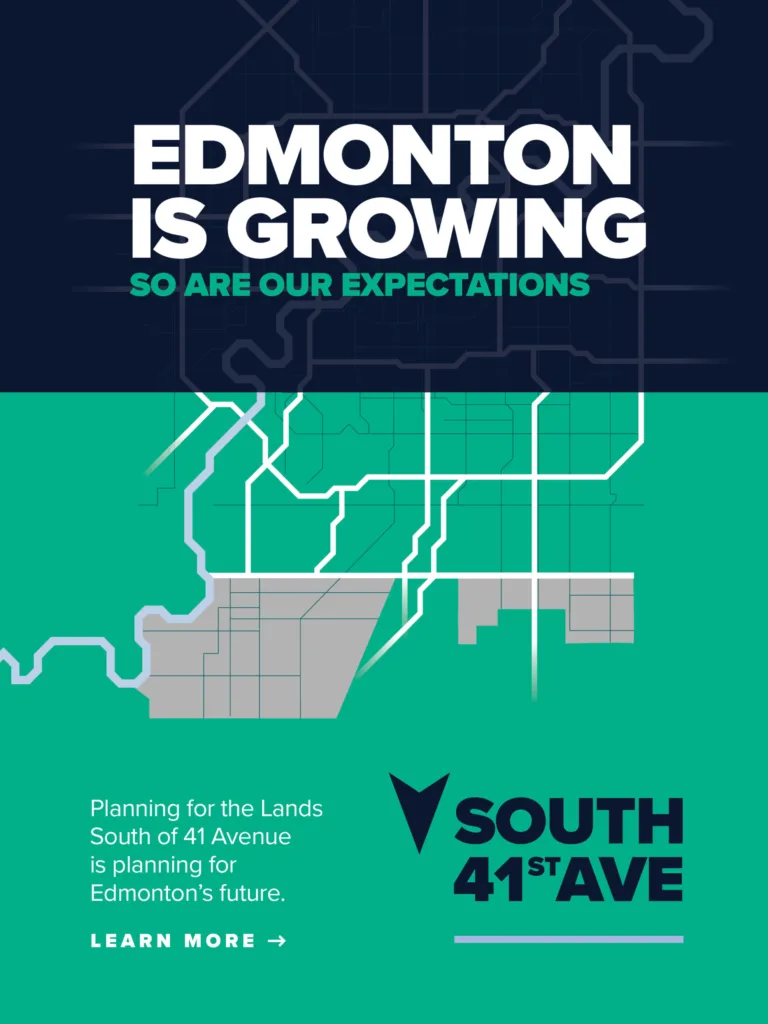
What are the lands south of 41st Avenue SW?
Work to begin an annexation process started in 2013. In 2017, the City of Edmonton officially applied to the Province to annex portions of Leduc County to support contiguous urban development. On January 1, 2019, the lands south of 41st Avenue were formally transitioned to the City of Edmonton. Edmonton’s municipal development plan, The City Plan, identifies these lands as a Future Growth Area — land intended to help accommodate Edmonton’s long-term population and housing needs. Planning for the area does not mean development happens overnight. Building new communities is a long process that requires years of planning prior to any houses or new businesses being built. Infrastructure design, approvals and investment take time. That is why decisions to unlock Edmonton’s future land supply need to be made well before the housing is actually needed. Acquiring the land and proactively planning for it is the first step to ensure that Edmonton’s residential and non-residential housing supply is not constrained and can be developed when needed by the market.
Why is this an issue now?
In 2022, City Council considered whether planning for the Future Growth Area should move forward or wait until more existing suburban communities were fully developed.
BILD Edmonton Metro (then UDI – Edmonton Metro and CHBA Edmonton Region) advocated for the City to continue planning for Edmonton’s long-term growth needs. Following discussion and advocacy, Council directed City Administration to undertake a comprehensive Servicing Study to better understand how the Future Growth Area could be supported by infrastructure and municipal services. That work began in 2024. City Council is expected to consider the Future Growth Area again in Q1 2027.
Why does it matter?
Decisions about the lands south of 41st Avenue are about more than where Edmonton grows. They will influence the City’s future housing supply, affordability, infrastructure investment, and economic competitiveness.
Ensuring Edmonton has an adequate supply of planned and serviceable land can help:
- Support housing supply and choice by preparing for the homes Edmonton’s growing population will need.
- Keep housing attainable by maintaining a healthy and competitive supply of land for future communities.
- Provide investment certainty so builders, developers, rural landowners, and businesses can make long-term decisions with greater confidence.
- Plan infrastructure responsibly by giving the City time to coordinate roads, utilities, transportation and public services before they are needed imminently for development.
- Support economic growth by ensuring workers and families can find housing as Edmonton attracts new people, businesses and investment.
- Strengthen Edmonton’s competitiveness as communities across the region compete for residents, jobs, and investment.
- Give more Edmontonians opportunities to live near important employment hubs like the Edmonton International Airport and Nisku.
BILD Edmonton Metro’s Position
Edmonton should plan proactively for the lands south of 41st Avenue so the City is ready for future housing and population growth. BILD Edmonton Metro supports responsible, well-planned growth that considers infrastructure, municipal finances, environmental stewardship, and the needs of both existing and future communities.
Planning ahead for the future does not mean de-prioritizing investment in established neighbourhoods or existing growth areas. We have the collective capacity and responsibility to serve the present and future needs of our community well, at the same time. Edmontonians have unique needs based on their employment, family circumstances, and preferences. We need multiple forms of housing and different forms of growth working together to provide a range of options across the City.
Edmonton is an attractive place to live, work, and play, so the question is not simply where Edmonton should grow today. It is how Edmonton will be prepared for the growth that is coming tomorrow.
Position Letters | June 18, 2024
Letter to Urban Planning Committee | Item 7.2 – Growth Management Framework Update – Substantial Completion Standard – Metrics, Thresholds, and Supporting Information
Position Letters | August 24, 2023
UDI Letter to Urban Planning Committee | Item 7.1 – Growth Management Framework Update – Substantial Completion Standard – Additional Information
Position Letters | August 29, 2023
CHBA-ER Letter to Urban Planning Committee | Item 7.1 Growth Management Framework Update – Substantial Completion
Position Letters | June 7, 2023
UDI Letter to City Manager | Substantial Completion Policy – City Plan Growth Management
Building the Case for Responsible Growth
BILD Edmonton Metro has advocated on this issue since 2022 through research, presentations to City Council, formal submissions, public commentary and engagement with government and community stakeholders.
In July 2025, BILD Edmonton Metro released its Urban Growth Case Study, examining the economic and fiscal benefits associated with responsible urban growth. Though there are costs associated with all forms of growth, we are now building new communities more densely and efficiently then ever before, meaning that this growth can and does pay for itself.
As Council prepares to revisit plan authorization for the Future Growth Area, as per the City Plan, BILD Edmonton Metro will continue working with elected officials, City Administration, industry, the business community and other stakeholders to support an evidence-based approach to Edmonton’s long-term growth.
Reports | July 15, 2025
Urban Growth Case Study
External Website Links | July 15, 2025
BILD Edmonton Metro launches urban growth case study
External Website Links | July 16, 2025
CBC Radio Edmonton: Urban Growth Case Study
What This Means for Edmonton
Different groups will look at future growth planning through different lenses, but the underlying question is the same: How do we prepare Edmonton responsibly for the people who will call our city home in the decades ahead?
For City Council, this is a strategic city-building decision about housing supply, affordability, infrastructure, fiscal sustainability and Edmonton’s long-term vision.
For City Administration, it is a practical planning question about servicing, infrastructure, growth sequencing, costs and implementation.
For Edmontonians, it is about to housing choices, affordability, taxes, transportation, and quality of life.
For the building and development industry, it comes down to having the certainty and land supply needed to invest, plan and respond to future housing demand.
For the business community, it is about Edmonton’s ability to attract investment and workers — and ensuring those workers have places to live and work.
For community organizations, it is about managing growth responsibly while balancing different environmental, social, infrastructure and community priorities.
Hear What Others Have Said
The conversation about Edmonton’s growth is bigger than one organization.
How and where Edmonton grows has been the subject of significant public discussion. Housing affordability, infrastructure costs, land supply, infill, new communities and the city’s rapid population growth have all shaped the debate.
Explore news coverage, commentary and different perspectives on Edmonton’s growth and the lands south of 41 Avenue:
External Website Links | January 13, 2023
New standard could help shift Edmonton’s growth pattern
External Website Links | August 29, 2023
Suburban sprawl costs Edmonton taxpayers more than infill: City report
External Website Links | June 20, 2024
Opinion: Building out neighbourhoods before starting new ones won’t work
Position Letters | June 21, 2024
The Great Southern Debate: The political lines are being drawn between developers and City Hall
External Website Links | June 23, 2024
Edmonton’s plan to stop sprawl faces pushback from developers over housing affordability
External Website Links | December 17, 2024
Edmonton policies and processes could be targeted by Housing Delays Portal
External Website Links | February 6, 2026
Opinion: A growing Edmonton is an asset, not a liability
External Website Links | July 8, 2026
Population boom persists: Should Edmonton greenlight new neighbourhoods to deal with growth?
This Is Where We Land
Real Talk on South of 41st Avenue SW & Economic Opportunity