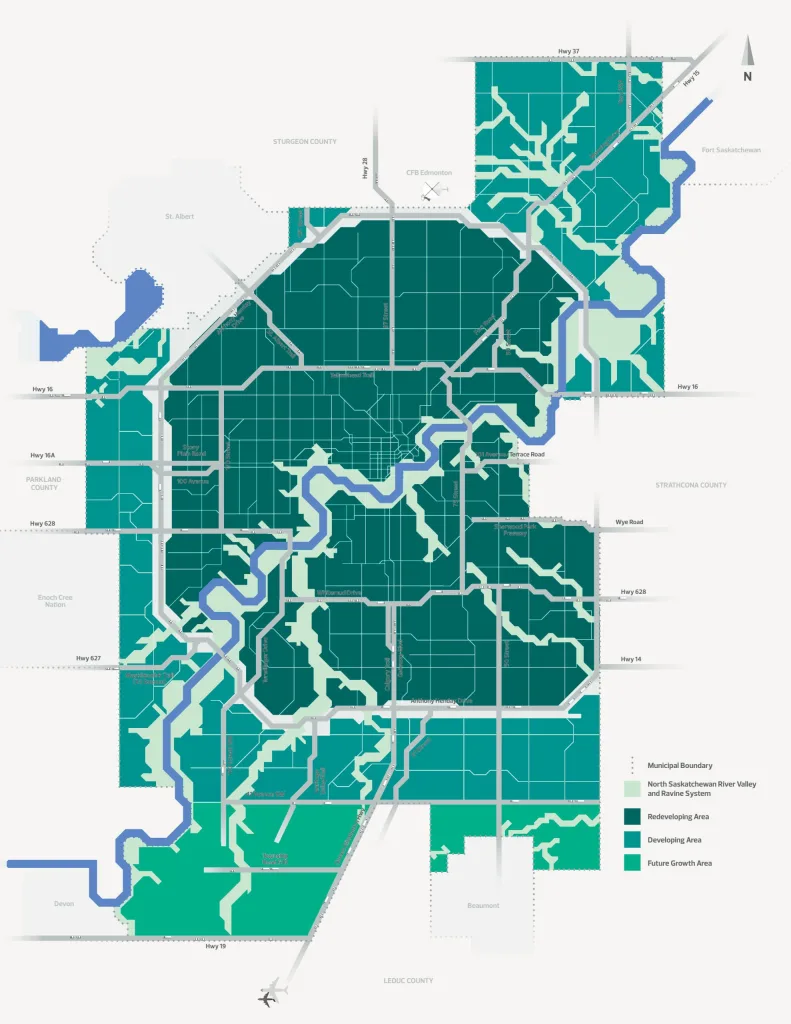
The future of Edmonton’s growth is entering a critical juncture in 2027. Industry leaders are calling on city council to prioritize planning for the development of lands south of 41st Avenue as they believe they are crucial to maintaining the city’s edge in housing affordability and economic health.
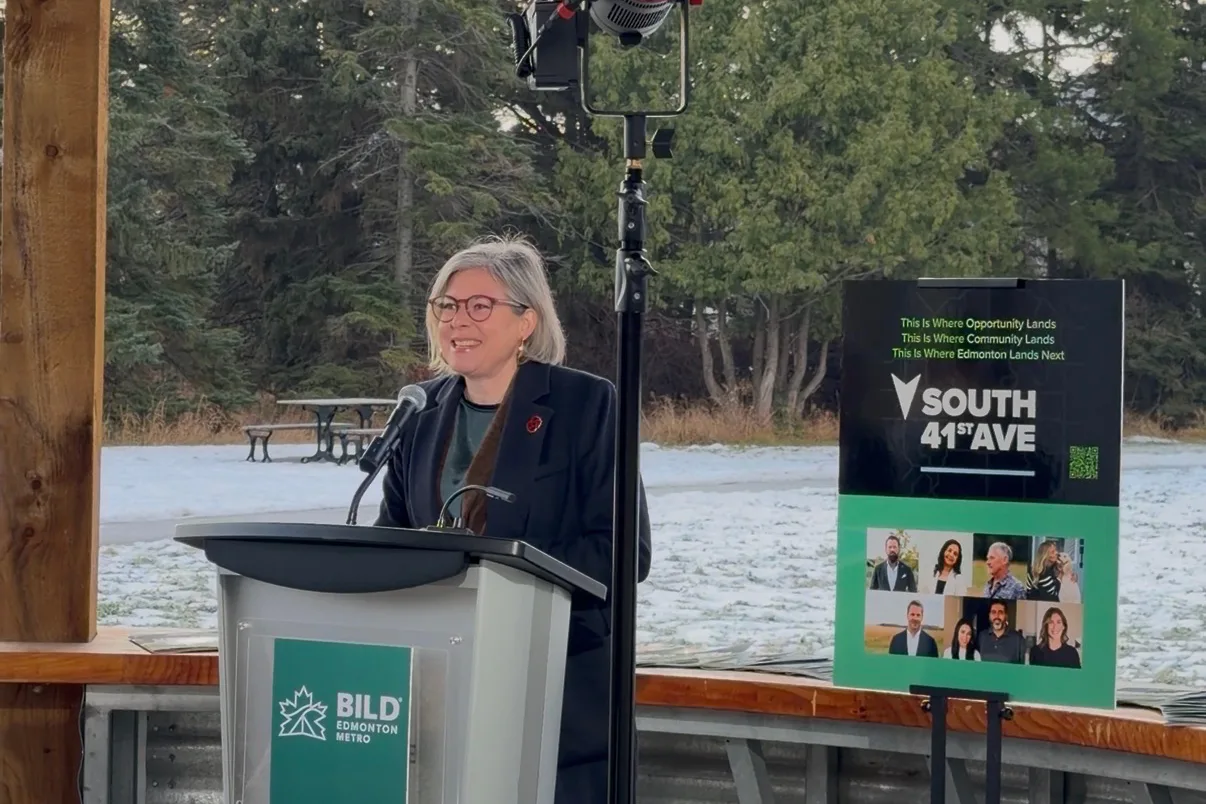
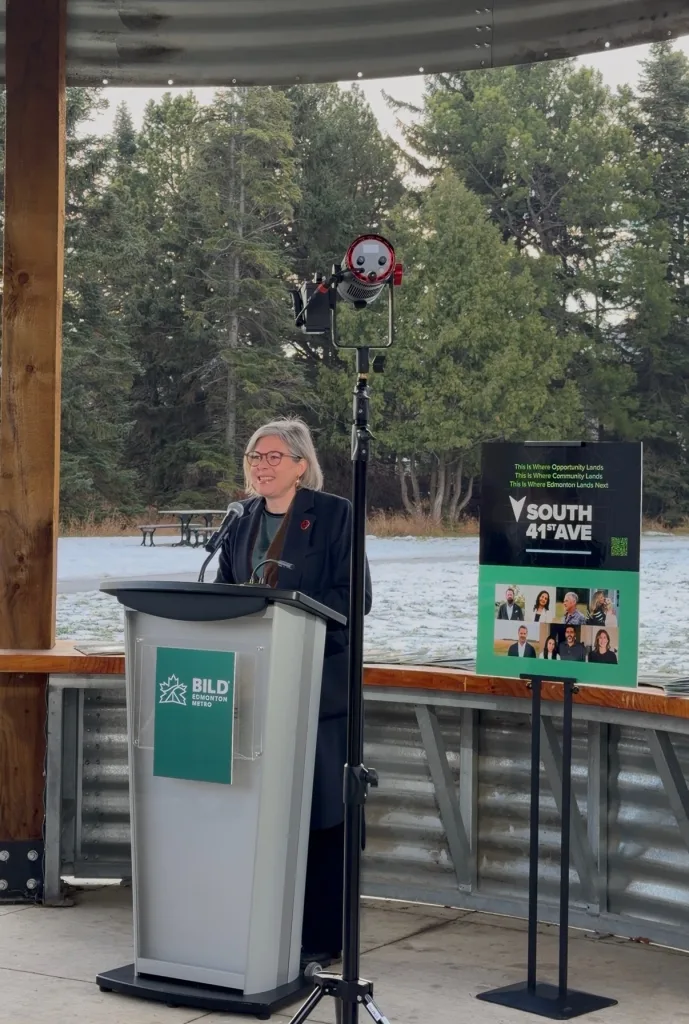
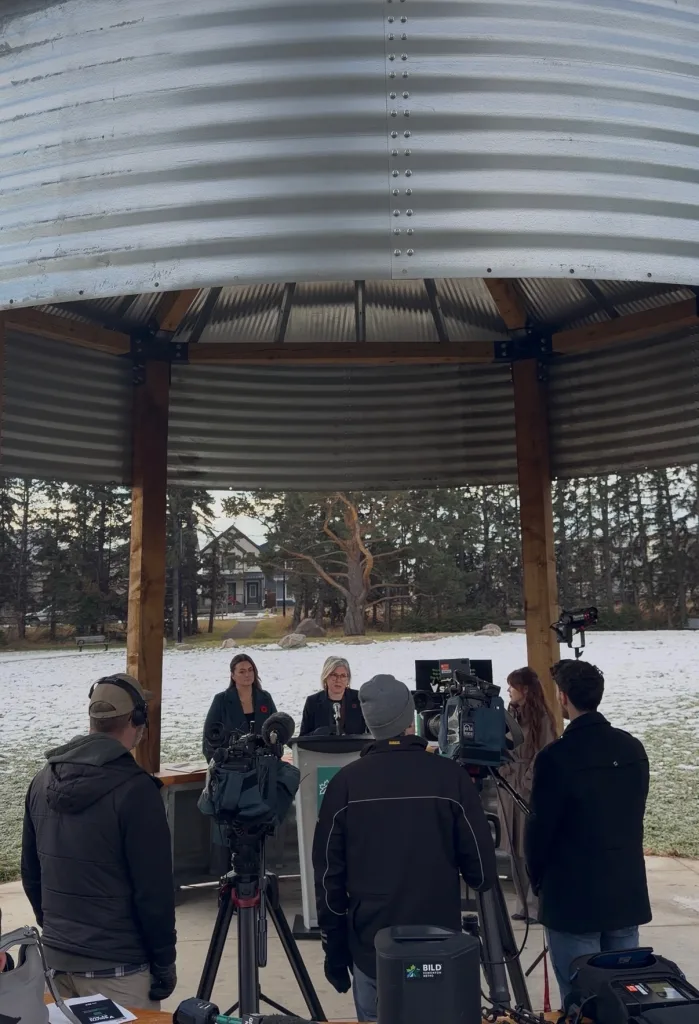
In a press briefing on November 5, BILD Edmonton Metro, the Edmonton Chamber of Commerce, and CREDA Edmonton Region presented a united front pressing City Council to authorize planning for the development of an estimated 9,000 hectares of annexed land immediately to the south of 41st.
They say the move will unlock the vast potential for future homes, jobs, and investments that the area holds, but that time is quickly running out, and some say may even be already too late.
The City annexed the massive parcel of land in 2019 but its development has stalled as elected officials debated which avenue of growth to take. Whether to concentrate growth on already existing communities or in new greenfield developments, such as the south of 41st Avenue lands.
But BILD Edmonton contends that planning ahead for the future does not mean de-prioritizing investment in established neighbourhoods or existing growth areas, and that having this plan ready helps maintain a full range of housing choices that are key in keeping Edmonton homes affordable.
BILD Edmonton CEO, Kalen Anderson, told journalists that new communities are a “critical part” of maintaining and even accelerating Edmonton’s growth.
“As residential, commercial, and industrial areas develop, they expand the city’s assessment base, support local business growth, and create places for people to live and work,” she says.
Anderson says this path to growth has already proven successful in the past as the Heritage Valley and Windermere plan areas – both adjacent to the new proposed area of growth – are projected to bring in approximately $309 million in annual tax revenue (at full build out) for the city and the area will in fact generate an annual surplus of $60 million per year which can be used to support other services city-wide.
“New communities are net new contributors to our economy and fiscal sustainability,” Anderson says.
Even the City of Edmonton’s most recent fiscal assessment, presented in its Integrated Infrastructure Management Plan, projects that the Kendal neighbourhood will generate a net fiscal benefit of $492 million after accounting for costs over a 50-year time span.
“This surplus can help offset the costs of municipal services, facilities, and other citywide expenditures. In other words, the neighbourhood is projected to generate significantly more revenue for the City than it costs to service over the long term.”
For her part, Edmonton Chamber of Commerce Vice-President Heather Thompson says the measure will play a key part in keeping property tax increases in check.
“With the proposed four-year budget before council, with a property tax increase of 4.9 per cent, that question is timely,” she says at the event.
“As deliberations begin, we need to keep that number as low as possible while protecting the essential services that Edmontonians rely on. Households and businesses are making hard choices every day with what they can afford. I’m asking city council to do the same, and to be very clear about the city’s priorities.”
Robynn Holstein, CREDA Edmonton Region, Executive Director, says approval for the planning of the lands south of 41st creates the conditions for long-term investment, job creation, and economic prosperity.
“As Edmonton continues to grow, we need to ensure that future planning considers not only where people will live, but also where they will work and where businesses will have room to expand,” she says. “Our message is simple: We need to plan ahead, plan responsibly, and provide certainty for future investment.”
BILD Edmonton’s Anderson warns the process to get this approval has dragged on for far too long. The process to annex the lands south of 41st Avenue began in 2013, and the lands officially became part of Edmonton effective January 1, 2019. Yet, land inside a city boundary is not automatically planned, serviced or ready to build on. “Why annex the parcel if it’s not going to be used,” she asked.
Inaction may already have cost Edmontonians not just in slowing the momentum of growth but in constricting housing supply that contributes to the rising cost of homes.
“BILD Edmonton Metro’s analysis from the summer of 2026 estimates that the Southwest District has approximately 9.6 years of low-density lot supply remaining at current consumption rates. This means that we are already in a housing shortage in the most populous and fast-growing sector of the city. The sense of urgency is real; we are running out of time to start the process to prepare adequately to support future growth.”
To give the public all the information regarding the advantages of developing the lands south of 41st Avenue, BILD Edmonton Metro also launched its This Is Where We Land campaign. The website contains information, including video shorts from stakeholders, on this development’s impact on all aspects of life in the city today and in the future.