
Infill has been top of mind for many lately, and rather than shying away from the debate, BILD Edmonton Metro leaned into the topic at their April luncheon. From garage and secondary suites to row housing and mid-rise apartments, Edmonton has been a leader in delivering housing of all sizes and scales.
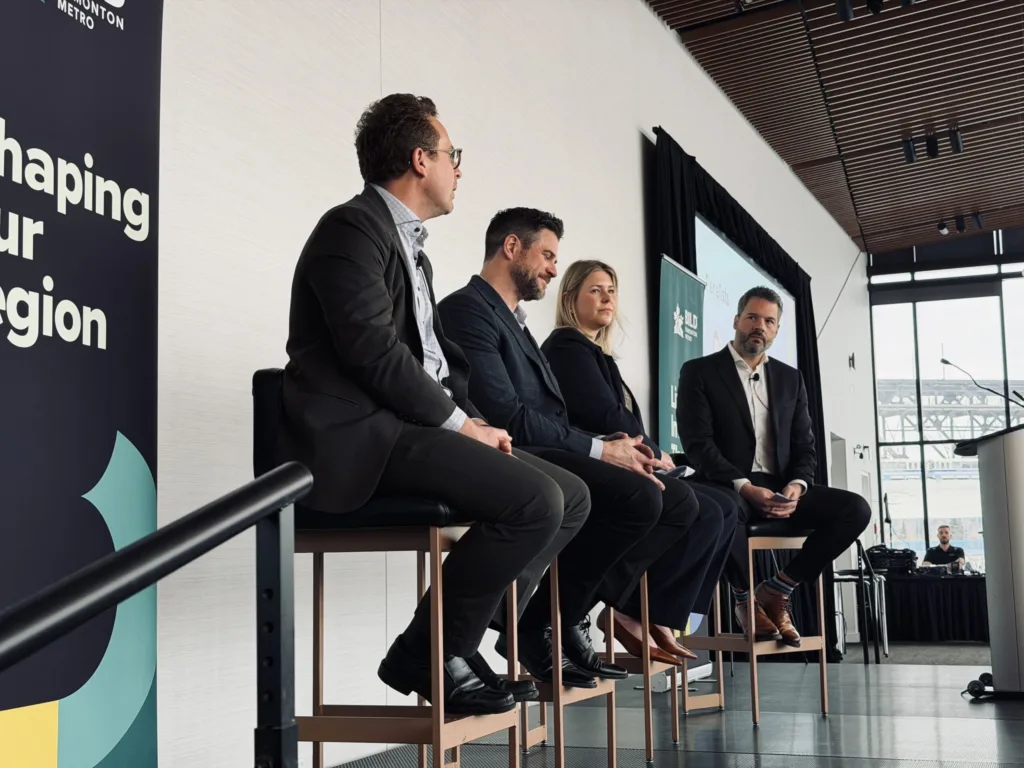
The panel was moderated by Paul Lanni, President & CEO of Averton, the luncheon panel included Sydney Bond, Vice President at Rescom and Chair of BILD Edmonton Metro’s Infill Committee, Travis Pawlyk, Branch Manager of Development Services with the City of Edmonton, and Nicholas Carels, Vice President with Streetside Developments.
Together, the speakers explored the future opportunities and challenges of infill in Edmonton, all aligned around a shared vision: accommodating 50 per cent of new housing in redeveloping areas, while expanding a diverse housing supply that strengthens affordability and supports new Edmontonians.
Why Infill, Why Now?
“Infill isn’t new to Edmonton — it’s been shaping our city for decades and evolving alongside our growing population,” said President of Cantiro and BILD Edmonton Metro’s Board Chair Katrina Rowe. “As our region continues to welcome new residents, infill will play a critical role in supporting housing affordability, choice, and complete communities.”
From the first Infill Roadmap in 2014 to the Zoning Bylaw Renewal Initiative in 2024, Edmonton has emerged as a national leader in housing policy and innovation. These efforts have led to a regulatory framework that is both permissive and enabling of infill and a wide range of housing forms. However, this progress has been incremental – built over more than a decade of engagement – and for those new to the city, that history is not always visible or well understood.
That’s why BILD Edmonton Metro launched the Infill Priority Actions Plan – providing clear context on where infill policy began, where it stands today, and where it’s headed. At its core, the plan sets the stage for a major increase in infill housing to accommodate Edmonton’s growth, but from a more comprehensive view, it prioritizes timelines, affordability, and predictability.
The plan outlines 22 actions designed to take the next step forward, from improved communications and engagement to continuously reviewing permitting processes, to improving inspection efficiency to reduce project delays.
“This topic will always be a little bit contentious – that’s why the Infill Priority Actions Plan is so important – it invites us all to be part of the problem-solving,” said Lanni during the panel conversation. “But, if we don’t use infill as a tool for growth, then housing will just get more expensive. We’re not going to hit our target by just adding garage and basement suites; we have to continue raising the bar.”
The event also explored the implementation of the plan’s main themes – regulations and rules, predictability, process and timelines, infrastructure and construction, and communication and community relationships. Through each of these, the Infill Priority Actions Plan calls for streamlined approvals, strengthened partnerships, and more consistent regulations, and highlights the need for strategic infrastructure investments in established neighbourhoods.
Policy-Driven Results
Edmonton’s strength lies in its ability to offer a variety of housing, whether row housing, single-family homes, town homes, mid-rise and infill units, or suburban small-scale and mixed-use neighbourhoods; but, no single approach will meet the demands of a rapidly growing city.
In the region, infill represents both a challenge and an opportunity, reframing land use, infrastructure, and affordability, while also considering innovation and revitalization.
While policy changes are critical, their success ultimately depends on how they are applied on the ground. For the building and development industry, infill is not a one-size-fits-all approach — it requires responsiveness to community needs and a willingness to test new ideas in real time.
“Being able to adapt is a huge part of the process,” said Carels. “Whenever we try something new with one of our homes, we do something called a ‘test kitchen’ where we talk about what is missing and what people might need. That’s been our approach to infill. We will work in 2 or 3 different test kitchens at a time to ensure that the final outcome works well for the community, remains affordable, and keeps Edmonton in a good position.”
Similarly, BILD Edmonton Metro’s Infill Action Priorities Plan doesn’t just cover the basics when it comes to infill, but also looks into the early stages of development, from streamlining approvals and reducing regulatory barriers to improving alignment between builders and the City.
New Infill and Aging in Place
Across Edmonton’s neighbourhoods, the public and private sectors have worked together to deliver the right mix of housing, so families can stay rooted in their communities over time. “Infill is about supporting multigenerational living, making space for aging parents and adult children, and ensuring people can continue to call the same neighbourhood home through every stage of life,” said Pawlyk.
And, with new growth comes new challenges. “Even with new policies in place, the debate around infill is not going away,” he added. “We have to reframe it so that it’s not just a stereotypical tall, skinny house, and work to align development with how people actually want to live.”
The Future of Infill
“When we think about infill, we tend to have a myopic perspective, thinking of just one or two things,” said Bond. “It’s so much broader than that.” Infill isn’t just about adding homes — it’s about collaboration between industry, trust from residents, and redefining how communities grow and adapt.

How we define ‘good’ design stems from meeting the needs of all residents, providing high-quality products, and preserving affordability. With Edmonton’s continued population growth, especially from interprovincial migration and newcomers, the need for new housing is a real concern. And, to locals, housing choice matters.
“We have to stop framing housing growth as an either-or debate. It oversimplifies a very complex reality,” says Bond. “Edmonton’s success has always come from offering choice, not from forcing people into one single housing model.” And these new builds avoid exactly that.
When it comes to keeping the infill conversation going, creating connections and maintaining communication is key. With hundreds of different builders coming in, and even more new residents, changing the narrative around future growth will be a big piece of the puzzle. The message, from industry professionals like Bond, is clear: “The way we live is evolving, and we have to keep up.”
Thank you to the Presenting Sponsor, Active Homes, Lunch Sponsor, Homes by New Era, Support Sponsor, Whissell Contracting, Host Bar Sponsor, Select Engineering Consultants, Dessert Sponsor, Singh Builders, and Creative Sponsor, MLZ Creative.
Written by Payton Phillips