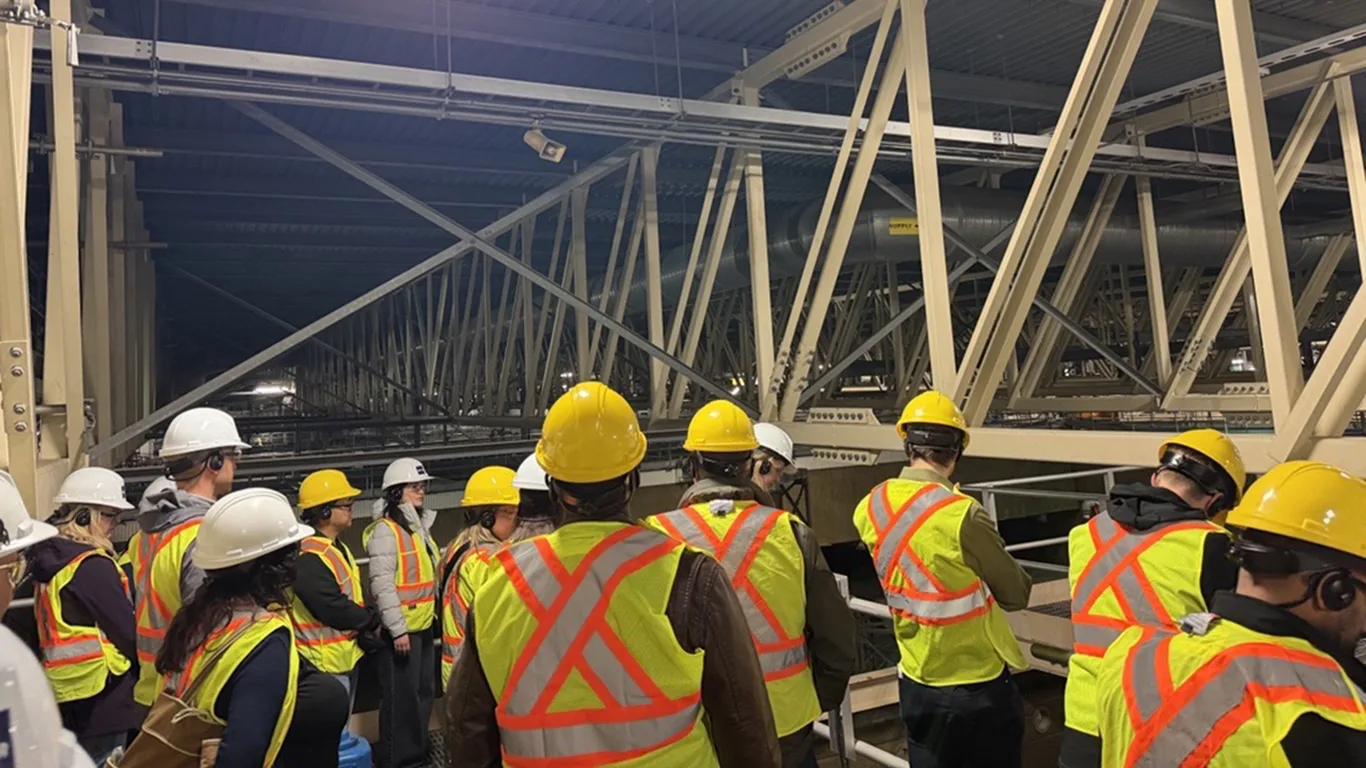
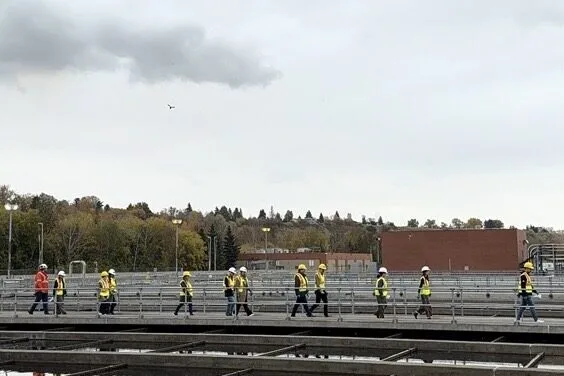
Sewer pipes are not sexy. Or at least, that was the consensus before we spent an afternoon touring Edmonton’s water and wastewater system.
For our final Field Trip of the year, BILD Edmonton Metro members went somewhere most people never get to see: behind the gates of EPCOR’s Gold Bar Wastewater Treatment Plant and Rossdale Water Treatment Plant.
If you’re one of those people with an irrational fear of snakes coming up through the sewer, you may want to skip this next part. Because we learned a lot on this Field Trip. Including the fact that a live snake once made its way through Edmonton’s wastewater system, was pulled out at Gold Bar and apparently went home with an employee as a pet.
So yes, things can get messy. But underneath the smells, tanks, pipes, and billions of litres of water was a much bigger conversation about how we build a growing city without unnecessarily building everything bigger. Because bigger is not always better.
Build for What We Actually Need
Edmonton is growing, but the way we design infrastructure is changing too. People use water differently, technology has improved and development happens in stages, so EPCOR and industry are rethinking how much infrastructure is actually needed and when.
EPCOR is introducing new technology that allows the facility to treat more wastewater using the infrastructure already on site rather than simply continuing to expand its footprint as Edmonton grows. The facility’s long-term plan is expected to accommodate the city’s needs within its existing footprint through at least 2060.
The science behind it gets pretty nerdy pretty fast.
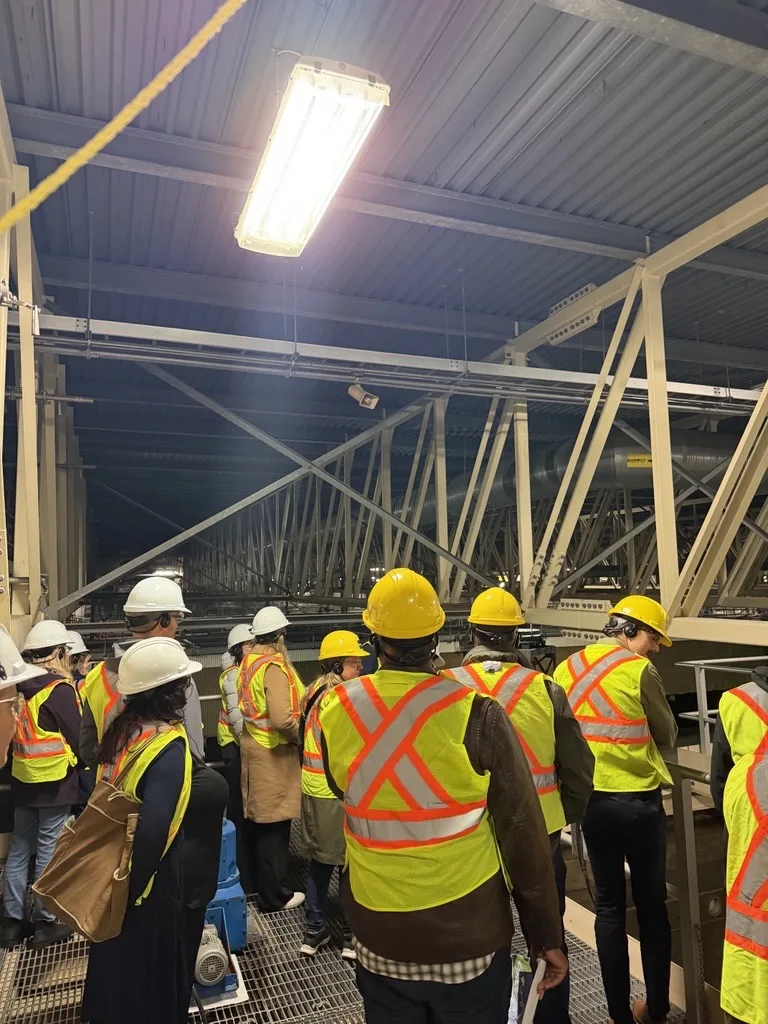
At one point, EPCOR’s Craig Bonneville described the biological treatment process as essentially “playing God and tinkering with nature” — creating the right conditions for bacteria to do a lot of the dirty work for us.
And that process creates value as well.
“We’re treating wastewater, but we’re also recovering resources from it. The biogas created through the treatment process can be used to heat the facility, and we’re looking at using it to generate electricity as well,” said Bonneville.
Think sourdough starter. Except sewage.
There’s a Cost to Overbuilding
The same idea applies outside the treatment plant.
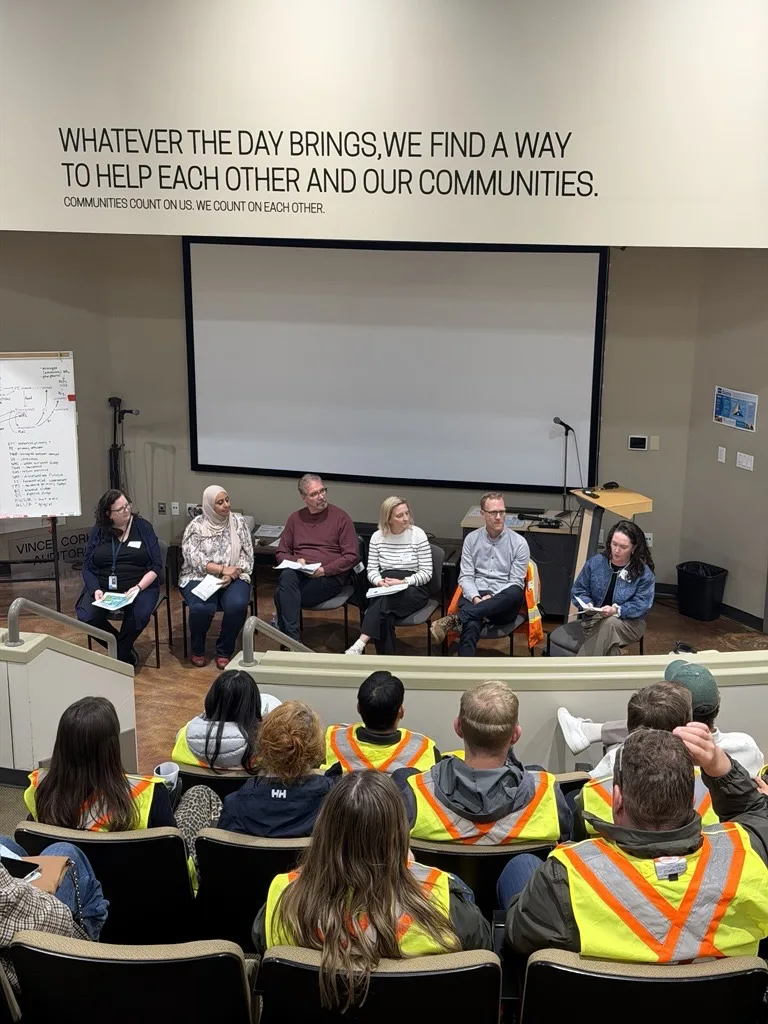
Patrick Shaver spoke about the value of staging infrastructure as communities develop. “The timing and staging of infrastructure is really important. Instead of building everything for the final population on day one, we can bring on what we need as growth happens.”
That matters because someone has to pay for what gets built, and ultimately those infrastructure costs become part of the cost of creating new communities and new homes.
For Crystal Brightwell, the development-side impact is straightforward: when infrastructure is right-sized, it can reduce unnecessary costs and delays that ultimately affect the price of building new homes – and keep homes attainable for people.
Susan Keating put it simply during the tour: “Being smarter about this type of stuff [GB1] is literally a win for everyone. It merges city finances with engineering, environmental stewardship and affordability. Let’s not unnecessarily increase the cost of growth.”
And the savings can be significant. Collaboration between EPCOR and the development industry to modernize sanitary infrastructure standards has already identified an estimated $600 million in potential savings.
Plan Together, Build Smarter
The other big takeaway was that none of this happens in isolation.
EPCOR understands the water system. Developers understand how communities come online. The City understands where and how Edmonton is expected to grow.
Howaida Hassan emphasized the importance of planning infrastructure alongside growth. “Planning is really important in how we stage infrastructure and how we work together. Rather than building everything for the final population at once, we can bring on what we need as growth happens.” That collaboration is ultimately what makes rightsizing possible.
BILD Edmonton Metro’s Jason Syvixay summed it up “So much of what makes a community work happens behind the scenes. We tend to think about homebuilding in terms of the homes themselves, but the infrastructure underneath them — the water and wastewater systems, the pipes and the networks — has a real impact on the cost of building and the affordability of housing.”
That was a common thread throughout the Field Trip: challenging long-standing assumptions about how much infrastructure needs to be built, and when. By working together, EPCOR, developers, homebuilders and the City can better match infrastructure to actual needs instead of automatically building bigger.
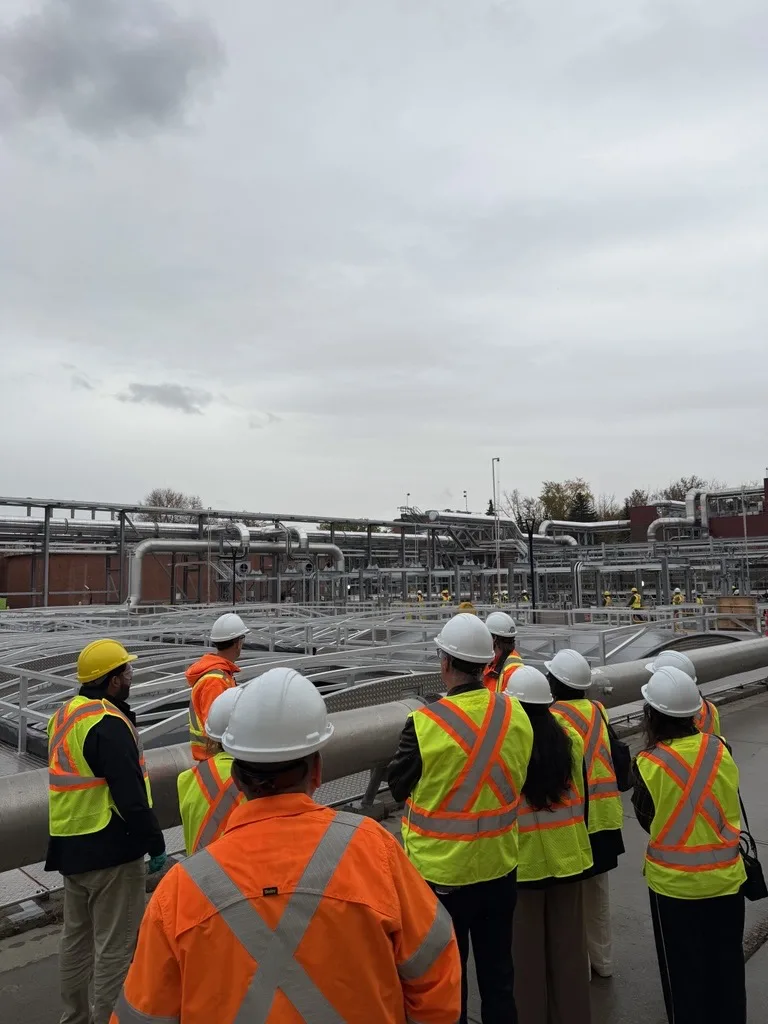
Growth is a good problem to have. It brings new homes, businesses and investment, but it also puts pressure on the systems underneath them. Using existing infrastructure more effectively and staging new investment alongside growth can help keep those costs from becoming an unnecessary burden on housing.
And that was really the point of this Field Trip. We went in to look at pipes and treatment tanks. We came out talking about smarter growth and how a city can get more out of the infrastructure it already has.