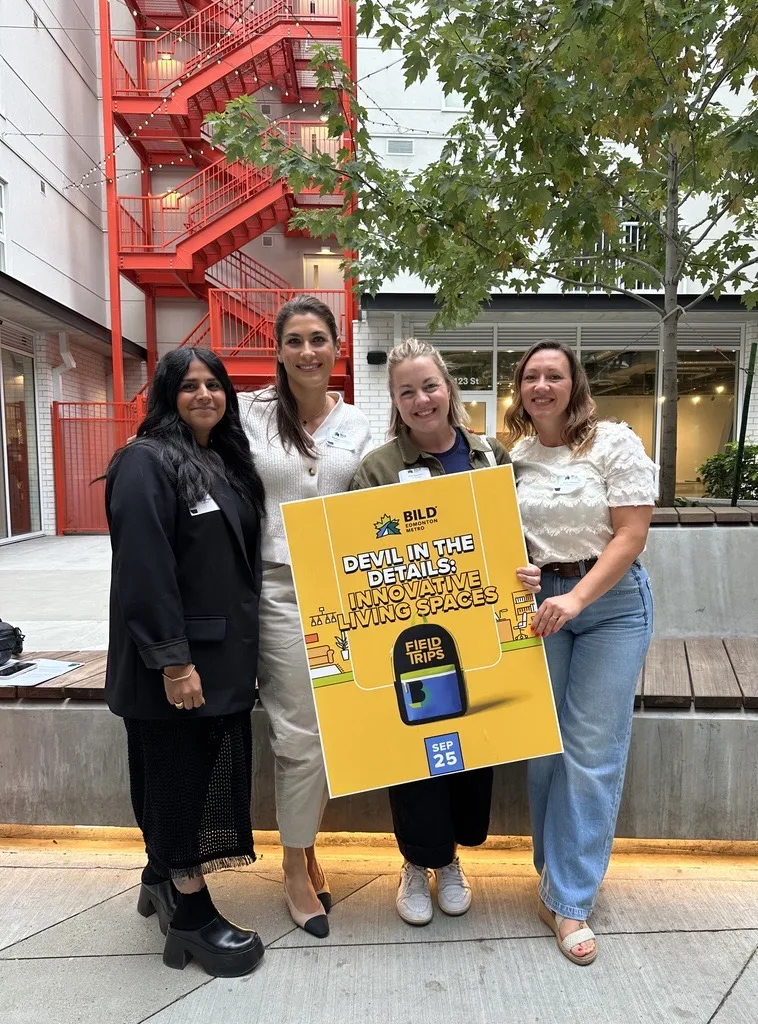
BILD Edmonton Metro’s September Field Trip, Devil in the Details, invited industry professionals to share their diverse perspectives on the role, importance, and impact of design. Design continues to evolve alongside shifting lifestyles, demographics, and community needs.
From infill projects in Edmonton’s core to family-focused homes in the suburbs, Field Trip speakers highlighted a common theme: great design isn’t just about buildings — it’s about people.
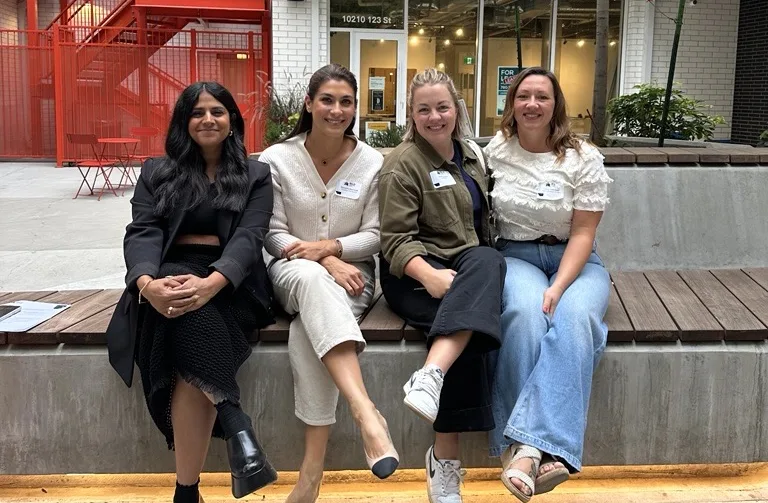
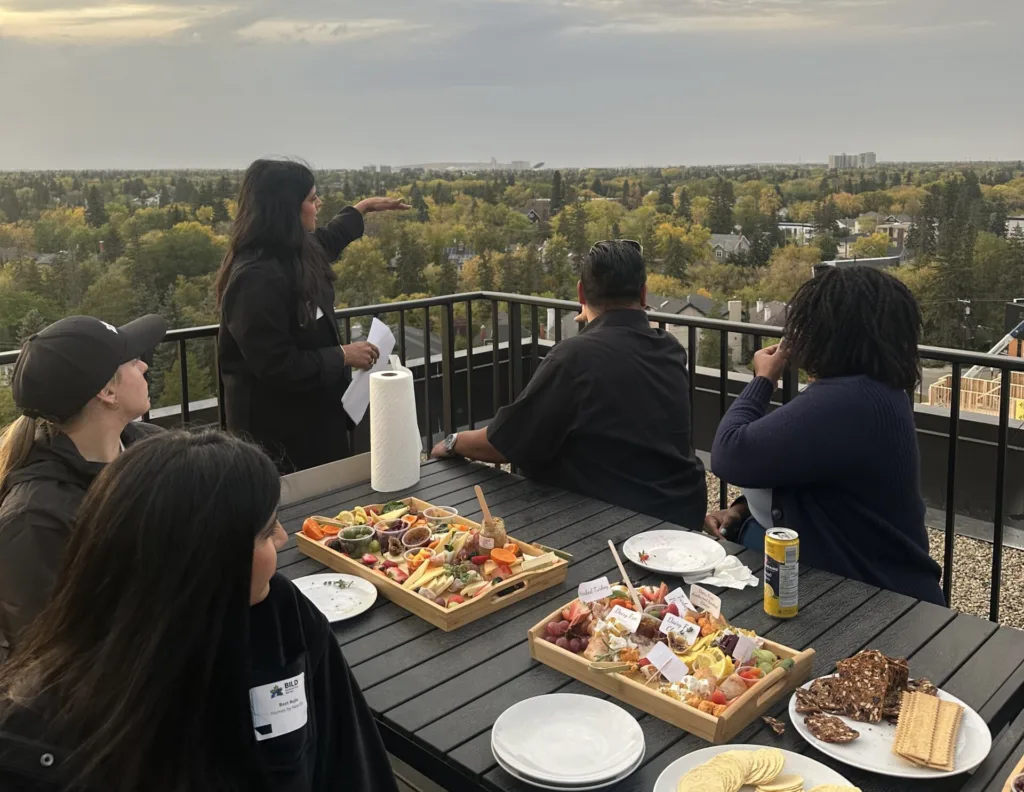
The tour was moderated by Alessandra Bruni-Smith (second from left), Owner and Principal of ChalkMark Residential, and featured Katie Schneider (second from right), Development Manager at Autograph, Jenna Johannesen (right), Marketing and Social Media Manager at Park Lighting & Furniture, and Taabish Zaver (left), Creative Lead of Product Development and Design at Cantiro.
Creating innovative spaces
According to Bruni-Smith, it’s often the small details that are missed when we think of design. She highlighted how design is everywhere, from how we plan cities to how we speak and engage with community. With Edmonton’s growing housing demand, a big part of design is innovation. By utilizing lots that are parceled in unique shapes, planners, city builders, and designers are still able to allow room for amenity spaces all while using existing land.
Schneider agrees, noting, “Our city and communities are constantly being shaped and reshaped.” In that spirit, Autograph is thoughtfully establishing its presence in the Wîhkwêntôwin neighbourhood, with both the Mercury Block and Cobalt developments anchoring opposite sides of 102 Avenue.
Designing for Real Life
For industry professionals like Schneider, design is about creating opportunities for people to “live their best lives,” she said. Working largely in infill and mixed-use developments, she described the ethos as one where “you sleep in your unit but live in the building.” With intentional amenities like study rooms, fitness spaces, and a big rooftop, the Mercury Block and Cobalt are designed to foster a sense of community and connection.
Schneider also noted how the global COVID-19 pandemic reshaped how people want to live, paying attention to details that were often overlooked before — a bigger pantry and more kitchen storage, open areas for connecting with friends and family, and spaces for chairs and desks for remote work or studying. “We’re constantly learning and evolving.”
For Schneider, design is about the lived experience and the systems that make those experiences seamless. “Design thinking means learning from experience and embedding those lessons into an organization’s systems and processes. By continually applying and refining these insights, we grow as a company and better serve our communities.”
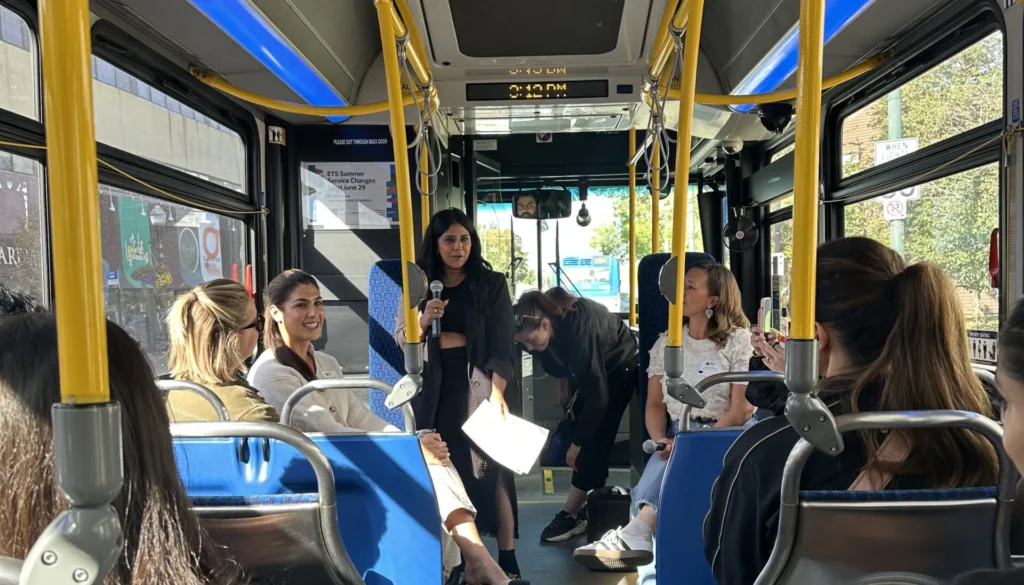
Zaver took a different angle on the topic, focusing on suburban single-family homes. She reminded the group that good design can often go noticed and unnoticed, seamlessly supporting lifestyles and creating spaces that just “feel right.”
For her, homes are meant to bring families together, no matter the age group, ethnicity, or lifestyle. “These houses are designed for families and hosting,” she said. “They’re perfect for the family whose parents want you to come over every Sunday for dinner, play board games and have a drink, and just stick around for a few hours to enjoy each other’s company.”
Residents change, and so does design
As demographics shift, so too must design. Today’s homes may need to suit a single parent, a young couple with no children, or a multigenerational household. Zaver highlighted the importance of adaptable homes that can respond to changing family situations, and spoke about the collaboration that goes into building, noting how partnerships within the industry are what allow designers and builders to find the right products for each home.
Johannesen brought in a perspective rooted in both design and lifestyle. “The quality of craftsmanship is something we all care about,” she said. For her, design isn’t only about the tangible elements of a home, but also about community. “I want my kids to grow up in a community where they can learn about other cultures, religions, and lifestyles. I feel like Edmonton is a great place to do that.”
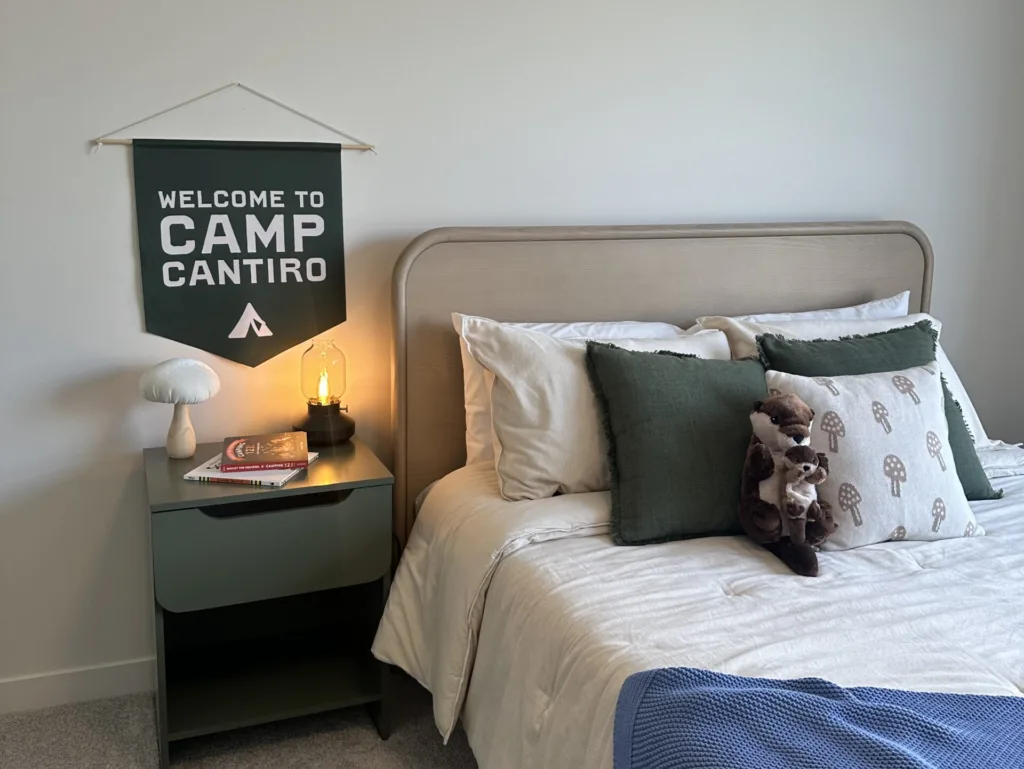
The first two stops on the tour landed attendees at Cantiro’s new showhomes in St. Albert, Bruni-Smith emphasized that “bungalows are back.” The showcased homes reflected this resurgence, with detailing that felt both grounded and effortlessly refined. Across every stop, one message stood out: design is not static. It evolves with people, their stories, and the ways they choose to live, work, and connect.
The importance of finishes
In her role at Park Lighting & Furniture, Johannesen’s work intersects with staging, lighting, and furnishings, where she sees a growing demand for simplicity. “From a lighting perspective, our clientele is often looking for clean simple lines without a lot of fussy additions,” she explained. With a focus on Canadian-based suppliers and even their own product line, her team is passionate about offering variety for every style of homes.
“Just because someone may have a budget doesn’t mean that they have to settle,” she said. “It’s important that people know they really can make a place into whatever they want, whether for a first home or their forever home.”
Good design has a ripple effect — shaping not only the spaces we inhabit but also how we connect with one another, how we work, and how we feel at home. At its core, design is about resilience and adaptability: ensuring homes and communities can meet today’s demands while being flexible enough to evolve with tomorrow’s.
Thank you to our Presenting Sponsor: B&A.
Written by Payton Phillips